Cat Litter Resource Center.
Practical, fact-led guides for cat owners, retailers, and private-label buyers sourcing plant-based cat litter.
Start here.
The pillar reference for everything cassava-litter: what it is, how to compare product information, what our report does and does not establish, and how it differs from tofu and clay.
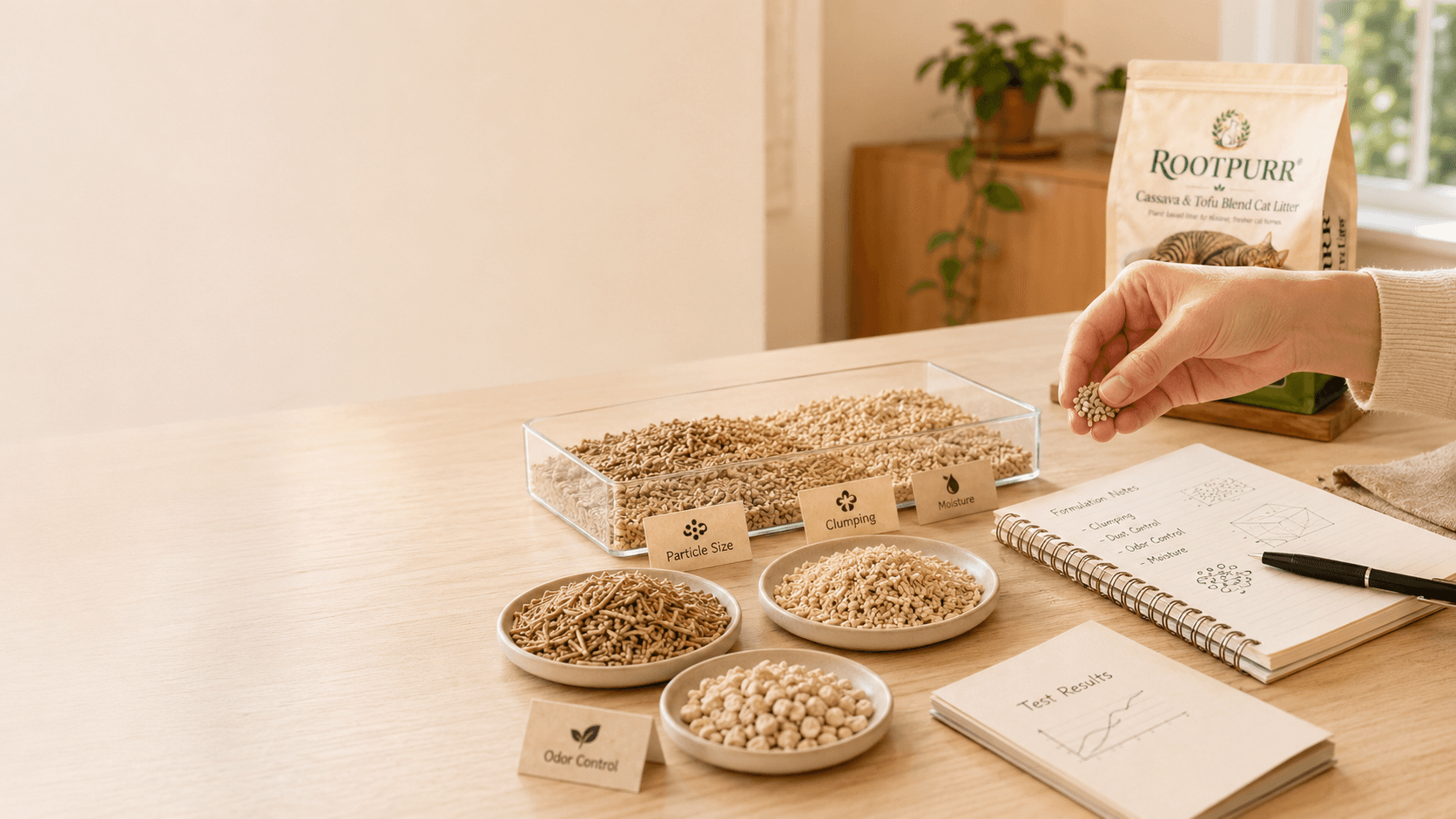
Cassava Cat Litter · The Complete Guide
What cassava-based cat litter is, how to evaluate product specifications, and why sample-specific documentation matters. Our published report does not establish HCN clearance.
- · Material science: starch + binder chemistry
- · Testing: sample-specific results and their limitations
- · Documentation: read the actual inspection report
- · Sourcing: MOQ, lead time, FOB / DDP options
Frequently asked questions.
Common questions about our brands, products and launch. More answers are in the FAQ.
How are RootPurr and TopHunter related?
RootPurr is our pet essentials store and the name of our original product brand. TopHunter is another brand we own. Each product has its own brand and documentation. TopHunter is currently a product preview.
Can I order now?
Retail checkout is not open yet. Catalog prices are informational. Shipping, payment, and return terms will be published before orders open.
How can I ask about the launch?
Email hello@rootpurr.com with your question. This opens a conversation with our team; it does not automatically subscribe you to a mailing list.
Which RootPurr product is available?
RootPurr has one product: Cassava Cat Litter in a 5.5 lb bag (approximately 2.5 kg). Final ingredient labels will be confirmed before retail launch.
Can I flush the litter?
Do not flush any RootPurr formula. Bag used litter and cat waste and dispose of it in the trash according to local requirements.
What does the lab report cover?
The published report covers a tested RootPurr-brand cassava-litter sample, not TopHunter products. It reports 1% powder content and 88% measured deodorization, with formaldehyde, aflatoxin B1, and Salmonella not detected under the report's test conditions. These results do not establish airborne dust levels, health benefits, or results for every formula and batch.
How do I change litter?
Introduce the new litter gradually alongside your cat's familiar litter. Scoop daily and follow the final package directions when the product launches. Usage varies with the number of cats and litter-box habits.
Is it suitable for a cat with allergies or other health needs?
We do not claim that these formulas treat allergies or respiratory conditions. Review the final ingredient label with your veterinarian before choosing litter for a cat with specific health needs.
Are subscriptions, free shipping, or refunds available?
Retail orders and subscriptions are not currently available. Confirmed delivery costs, subscription terms, and refund policies will be published before checkout opens.
Help your cat (and your home) settle in.
Source-linked guidance on litter-box routines and questions to discuss with your veterinarian. No product is presented as a medical treatment.
Cassava Litter for Kittens: Questions to Ask Before Choosing
RootPurr has not established kitten-specific safety or a universal safe age for its cassava formula. Review the final label and discuss your kitten’s needs with a veterinarian.
Read article →Cat Litter and Asthma: Evidence, Irritants and Product Limits
No RootPurr formula is established as an asthma treatment or the best choice for an asthmatic cat. Use product information alongside your veterinarian’s guidance.
Read article →Cat Litter Dust: Handling Tips and How to Read Test Claims
Distinguish visible powder, airborne particles, and health outcomes. A product report must match the claim it is being used to support.
Read article →Cat Litter for Small Apartments: Placement, Storage & Cleaning
Choosing litter for a small apartment? Plan box placement, compare pack sizes and cost per pound, and build a daily cleanup routine without flushing waste.
Read article →How to Introduce a New Cat Litter Without a Fixed Timetable
Introduce changes cautiously and observe your cat. A seven-day or percentage-based schedule is not a guarantee of acceptance.
Read article →Litter-Box Odor and Dust: A Practical Cleaning Checklist
A cleaning routine and accurate product directions are more useful than an unsupported odor-duration or dust-free promise.
Read article →Litter-Box Setup for Multiple Cats: Access and Daily Care
Start with enough accessible boxes, observe each cat, and keep a cleaning routine. More cats do not imply one universal litter-consumption estimate.
Read article →A Kitten’s First Litter: Labels, Access and Veterinary Questions
Do not assume a litter is safe to swallow or appropriate at a fixed age. Ask your veterinarian and check the final label.
Read article →Compare formulas with measurable specs.
Compare complete labels, pack sizes, directions and available evidence. These guides are published by RootPurr, not an independent product-testing organization.
Clay vs Cassava Cat Litter: How to Compare a Switch
Compare your cat’s acceptance, handling, cleanup, and actual product documentation. This is a comparison checklist, not a verified six-week customer trial.
Read article →Plant-Based vs Silica Gel Cat Litter: A Product Comparison Checklist
Compare individual labels and directions instead of assuming that all plant-based or silica products share the same dust, safety, lifespan, or cost.
Read article →Choosing Plant-Based Cat Litter: Evidence Before Rankings
There is no verified universal winner in this guide. Compare complete labels, directions, prices and product-specific evidence.
Read article →Cassava vs Tofu Cat Litter: Ingredients, Pack Sizes & Cost
Compare RootPurr cassava, tofu and blended cat litter by listed ingredients, pack weight and price per pound. Check disposal rules and what remains unconfirmed.
Read article →Build your own plant-based litter brand.
Checklists for formula, packaging, sample approvals and written commercial terms. Quantities, reports, lead times and payment terms require confirmation for your project.
Private-Label Cat Litter: A Documentation and Quote Checklist
Treat ingredients, testing, packaging, quantities, payment and delivery as written requirements to confirm, not promises inferred from a guide.
Read article →OEM Cat Litter Development: Confirming Milestones and Evidence
Use a written development plan with agreed specifications and approvals. This guide does not promise a fixed production or sample-delivery timetable.
Read article →Land your container without surprises.
Prepare a written cost comparison and confirm product-specific tariff classification. Official customs and trade references are linked; no universal duty rate or savings percentage is promised.
FOB vs DDP for Cat Litter: How to Compare Written Quotes
Compare named delivery points, responsibilities and written cost components. There is no universal percentage by which FOB is cheaper.
Read article →US Cat Litter Imports: How to Verify Tariff Classification
This guide does not assign a universal HTS code or duty rate to cat litter. Product-specific classification needs current customs review.
Read article →Want a guide on a specific topic?
We publish new cat-care and sourcing guides regularly. Tell us what you're researching (material safety, packaging certifications, retail readiness) and we'll prioritise it for the next batch.
Practical tools for your litter routine
Use your own numbers for costs, and read the limits behind performance claims.
Discuss your project with RootPurr.
Ask about product specifications, available sample reports, packaging and delivery terms. Production arrangements, batch documentation and product-specific customs classification require written confirmation.